
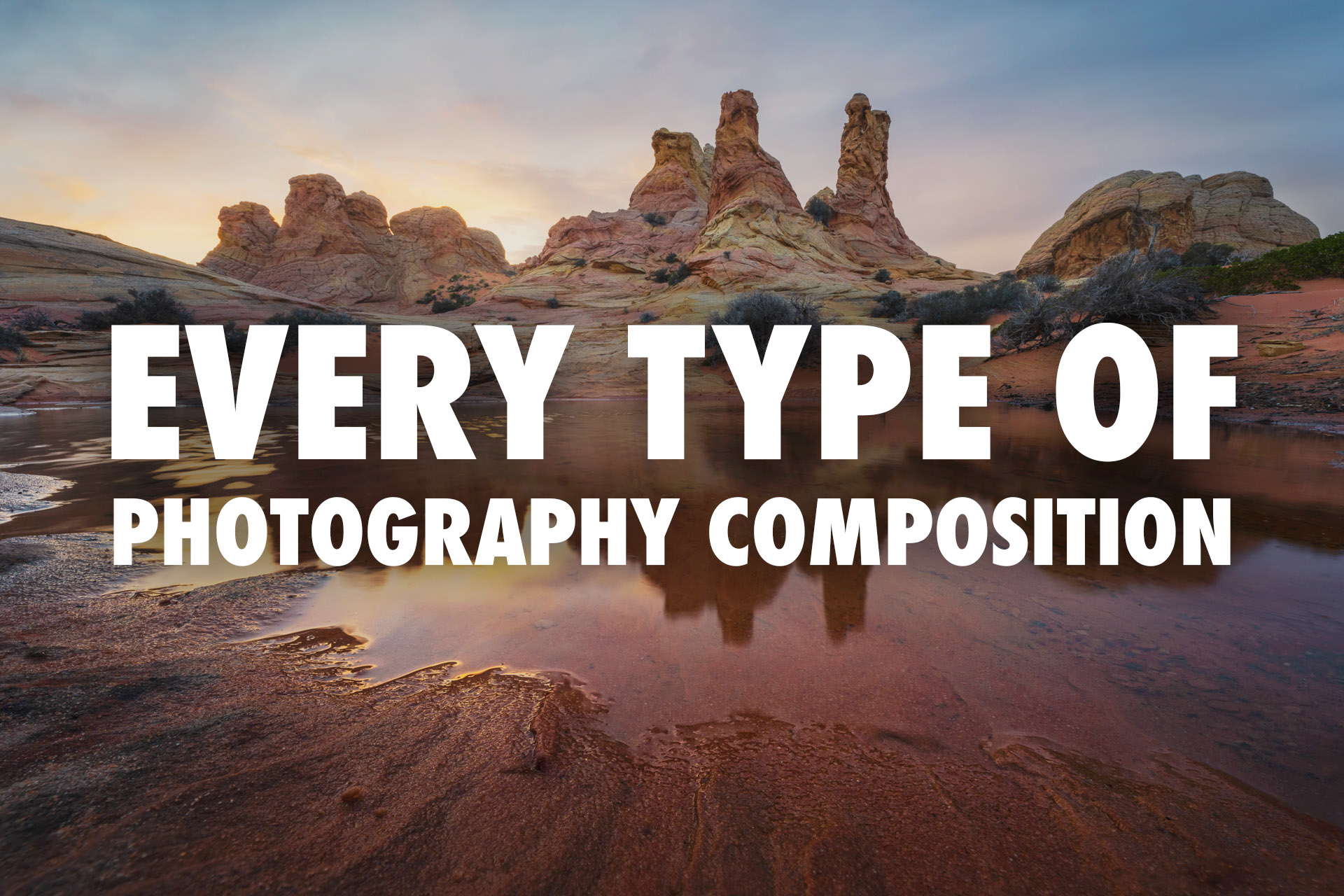
In general (key word being general), there are a limited number of landscape compositions that tend to look good. Obviously, art is subjective, but people can usually agree when a photo is successful or not. This article breaks down why a photo works and how we can categorize successful photos into specific types of compositions.
To give credit where it’s due, I first heard of this idea of categorization on a podcast featuring Marc Adamus, where he claimed there are only three types of compositions. While I think this is a great framework for breaking down a photo, I believe there are a few more than three, and in this article, I’m going to try to categorize them.
1: Leading Lines
This one’s straightforward. You have a subject, and then a line that points to or draws your eyes into that subject. These lines could be anything from a river to sand ripples to the leaves of a plant. The main point is that your leading line should actually lead somewhere in the photo.


2: Complementary Composition
These are the types of photos where you have more than one main focal point in a shot. If you cut the photo in half, you’d still have an interesting subject in each half, thus each half is complimenting each other. Think of iconic views like flowers and a mountain.


3: Natural Framing
Yes, the iconic “frame within a frame.” Think of places like Mesa Arch, where you have an epic view framed by the landscape around it. Once you get the hang of it, you’ll find natural frames everywhere; overhanging icicles, tree branches, gaps in rocks, or any tight spot you can fit your camera into.


4: Repeating Patterns
This is most often found in more abstract or “small scene” compositions, but it can appear in grand landscapes as well. In this type of composition, the repetition IS the subject of the shot.


5: Reflections
While reflections can appear in many types of photos, here we’re talking about shots with a near 50/50 split across the middle, creating a near-perfect mirror of the subject. Think alpine lakes, tidal pools, etc.


6: Layers
Similar in concept to repeating patterns, but while repetition can occur in any direction, layer-type compositions are almost always seen horizontally as stacked planes of depth such as sand dunes, foggy valleys, or mountains fading into the distance.


7: The Isolated Subject
This is all about minimalism; a lone tree, a leaf in a pond, or anything standing all by itself. This composition uses the absence of leading lines, framing, or other elements to draw all attention to a single subject.


8: Abstraction
Abstract compositions are less about depth, light, or subject and more about shape, color, and form. They may not fit into traditional compositional frameworks, but they can still evoke strong emotion and visual intrigue.


Final Thoughts
If you look at the most impressive landscape and nature photographs, chances are they fall into one (or a combination) of these categories. Often, the strongest images merge several composition types together.
When I’m composing a shot, and once I’ve chosen my subject, I actively look for any of these compositional opportunities. If I can’t find a leading line, natural frame, complementary element, or other structural anchor, I’ll often move on rather than force the composition. Learning to recognize when a scene doesn’t work compositionally is just as valuable as knowing when it does.
When you can identify which category a photo fits into, you gain insight into why it succeeds or why it doesn’t. Try reviewing your own portfolio with these categories. I guarantee your best shots will be ones that fit one or more of these compositional archetypes.
Leave a Reply