
Landscape photography is one of the most common genres of photography to pick up, but arguably the most difficult to master. Our cameras simply do not see the same way that our eyes do. To capture our artistic vision through a lens takes skill, practice, and knowledge of a few key concepts. In this article, I will share with you 7 key elements in every successful landscape photograph.
1 Composition / Framing

The biggest advantage of your camera is that it can get into positions and see fields of view that your eyes cannot. Use your cameras unique perspective to your advantage by creating interesting compositions that only your camera can capture. Composition is all about finding the most visually pleasing way you can put four corners around the landscape. To master this skill, look for natural framing, leading lines, or different elements to string together a cohesive scene. Composition is one of the most difficult things to master, but it’s perhaps the most important aspect of creating a successful landscape photograph.
2 Lighting / Shadow


You can have the most unique composition with an amazing subject, but if the light isn’t there, it’s not going to make for a compelling photo. In landscape photography, light is everything. Light works best when it is spotlighting something or interacting with the landscape. Angular light and backlight make for especially dramatic shots that lead you into a photo. Shadows, or the absence of light, can also tell a story in your photographs.
3 Depth


As a two dimensional medium, photographs naturally lack depth. It’s up to us, the photographers, to find ways to put depth or dimensionality back into the photo. Some of this can be done through editing, but most of it needs to be captured in the field. Things that give your photographs a 3D look include: leading lines, curves or S bends, distinct separations or transitions, overlapping layers, and atmospheric haze.
4 Focus Point

No matter what, your landscape photograph needs at least one focus point. Compelling photos need something for the viewer to latch onto and identify. This can be a mountain, a canyon, a rock formation, a tree or anything that stands out from the surroundings. My favorite landscape compositions are ones that are able string together several key focus points or interesting elements.
5 Layers / Repeating Patterns

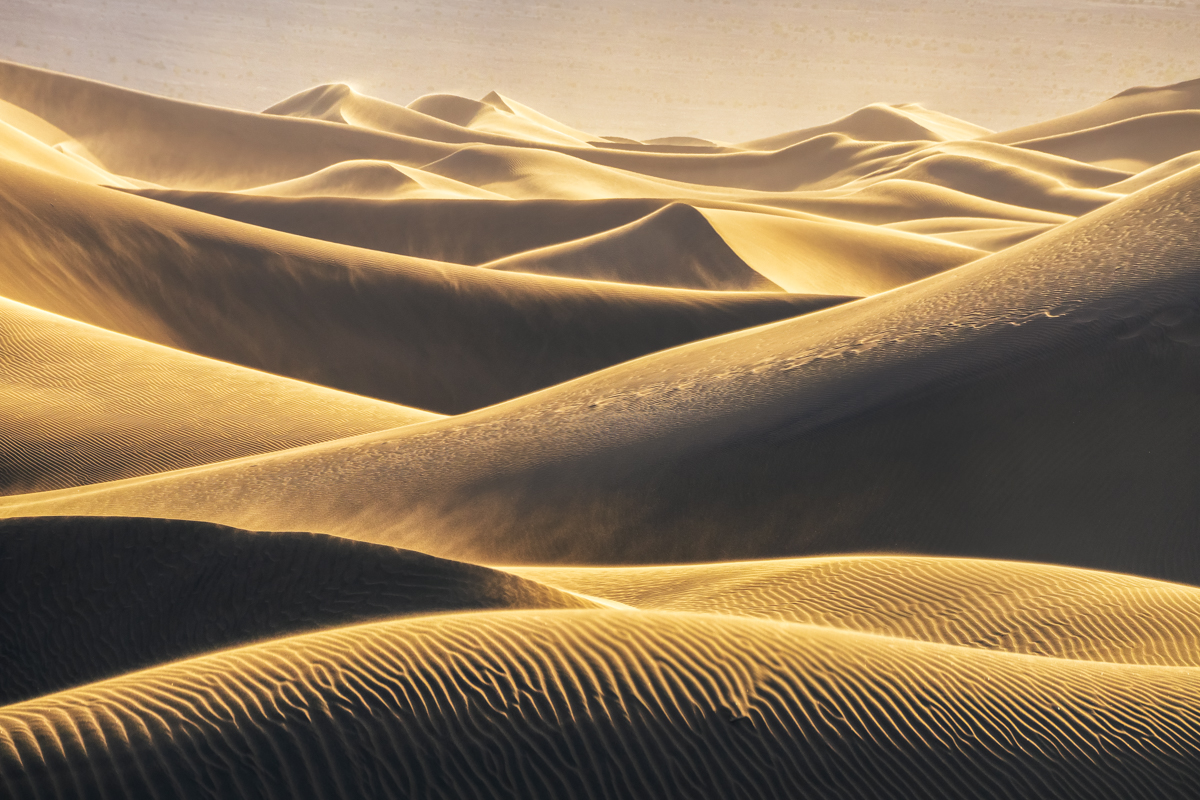
Photography viewers love looking at layers. Again, photographs are a two dimensional medium, but one way we can add depth back into a photo is through the use of layers. In the above example of the Mesquite Dunes of Death Valley, there are 14 distinct layers. Dunes are an easy example to create layers or repeating patterns, but try to think outside the box. Finding the perfect spot often requires you to do a lot of hiking and moving around to get things to line up.
6 Abstraction


This is an often overlooked type of photograph, but done right, abstracts can make for a big impact. The main goal with abstract photographs is to make the viewer wonder just what it is they are looking at. One of the reasons drones are so popular is because they can easily give us that perspective in which we question or have to think about the scale of the image.
7 Impact / Drama


Impact or drama in a landscape photograph can easily outshine all other elements, or it can even turn an otherwise boring photo into something masterful. Photographic impact comes from things we aren’t used to seeing in our everyday lives. Aurora borealis, the Milky Way, volcanic eruptions, and lightning storms: These are all examples of something that will create a big impact in your photos. Obviously this means staying up late, traveling to far flung destinations, or putting yourself in precarious situations, but the payoff is unmatched.
Leave a Reply